
tagged by: technical debt
Is High Quality Software Worth the Cost?
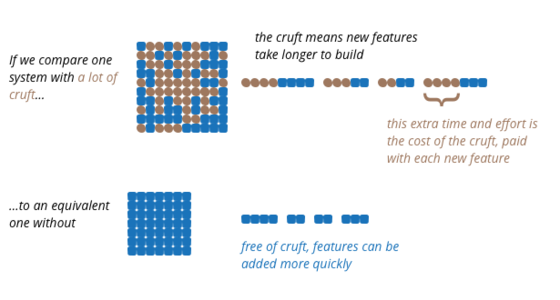
A common debate in software development projects is between spending time on improving the quality of the software versus concentrating on releasing more valuable features. Usually the pressure to deliver functionality dominates the discussion, leading many developers to complain that they don't have time to work on architecture and code quality. This debate is based on the assumption that increasing quality also increases costs, which is our common experience. But the counter-intuitive reality is that internal software quality removes the cruft that slows down developing new features, thus decreasing the cost of enhancing the software.
Code Smell
A code smell is a surface indication that usually corresponds to a deeper problem in the system. The term was first coined by Kent Beck while helping me with my Refactoring book.
Default Trial Retire
Within each normal-sized team, limit the choice of alternatives for any class of technology to three. These are: the current sensible default, the one we're experimenting with as a trial, and the one that we hate and want to retire.
Design Payoff Line
In the DesignStaminaHypothesis, the design payoff line is the amount of functionality below which it is possible to trade off design quality for time to market.
Design Stamina Hypothesis
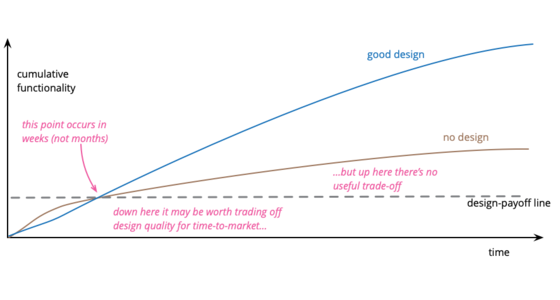
Is it worth the effort to design software well?
Detestable
(Here's an addition to your dictionary.)
Detestable (adjective): software that isn't testable.
Estimated Interest
TechnicalDebt is a very useful concept, but it raises the question of how do you measure it? Sadly technical debt isn't like financial debt, so it's not easy to tell how far you are in hock (although we seem to have had some trouble with measuring the financial kind recently).
Technical Debt
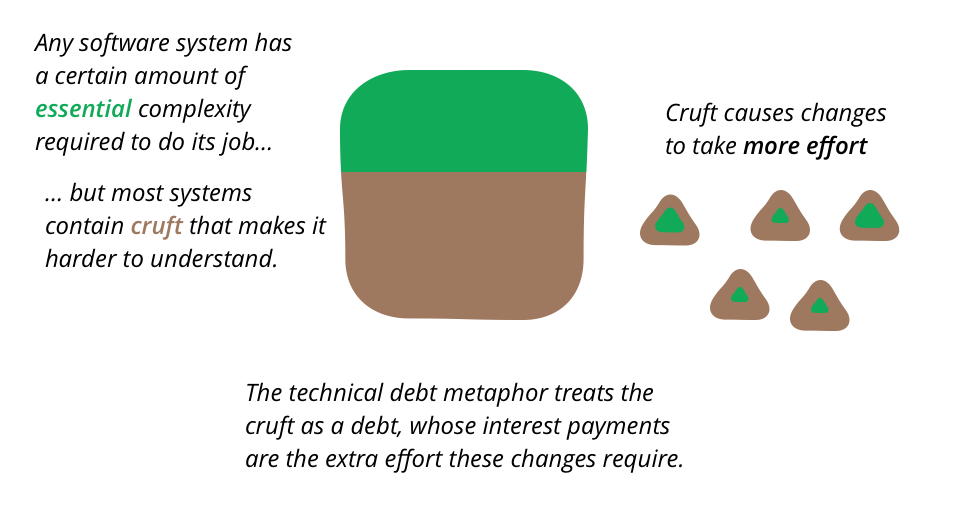
Software systems are prone to the build up of cruft - deficiencies in internal quality that make it harder than it would ideally be to modify and extend the system further. Technical Debt is a metaphor, coined by Ward Cunningham, that frames how to think about dealing with this cruft, thinking of it like a financial debt. The extra effort that it takes to add new features is the interest paid on the debt.
Technical Debt Quadrant
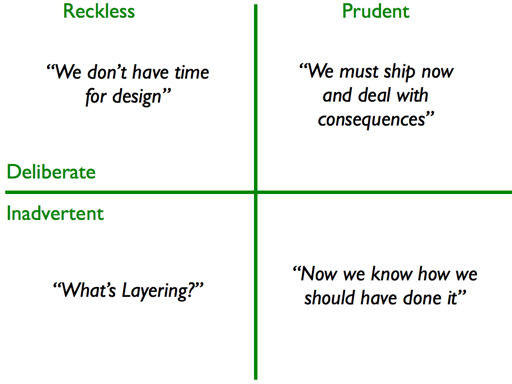
There's been a few posts over the last couple of months about TechnicalDebt that's raised the question of what kinds of design flaws should or shouldn't be classified as Technical Debt.