
Favorite Board Games
13 December 2025

Here's a list of my favorite games. Should a disaster destroy my collection, these are the ones I would strive to obtain again. I haven't ranked them, as trying to rank games feels arbitrary, although it's also fun. Instead I think of these as the games I would award a star to, were I a boardgaming Michelin guide.
Asking someone to recommend favorite board games is like asking someone to recommend films - everyone has different tastes. I would say that most people I regularly play with like most of these games, but every one of these games is disliked by at least one these folks.
To dig into areas that I'm not so interested in, I'd suggest looking at the top rated games on BGG. Many of my favorites are on that list, but there are also plenty of games that appeal to dedicated board gamers with different tastes. For games oriented to more casual play, a good place to start is the award winners of the Spiel jes Jahres, a long running award catering to casual family play. It includes a special category, the kinderspiele, for games to play with children.
Some of these games are out-of-print. They may still be available on the secondary market - a good place to look is BoardGameGeek's GeekMarket. I've provided Amazon links for those currently available there, but the BoardGameGeek page will often list more sellers. Many of these games have come in several editions, often with different box covers, and sometimes different names. I've shown the cover that seems to be the most available one at the moment. The BoardGameGeek link points to the most active page on the game, which sometimes is an earlier edition.
Introductory Games
As someone who's been playing board games for a long time, I'm often asked about what games I'd recommend to people who are interested in giving gaming a try. This is a difficult question, rather like someone who has never seen a movie asking me to recommend a film so they can know if they like movies. But we have to start somewhere, so I like to start with games that have a small amount of rules, but a decent depth of play. I know keen gamers who dislike games with lots of rules, so I feel this is the best way for someone to take first steps to see if they like what modern board games have to offer.
Carcassonne
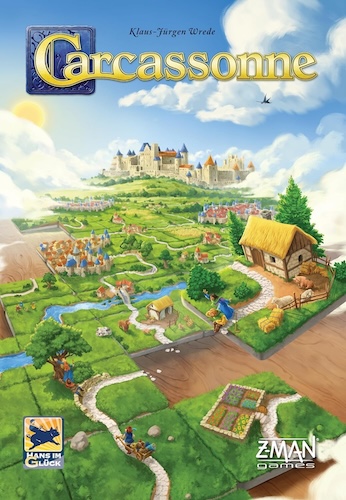
We begin Carcassonne with one small tile face up, and lots of face down tiles. Each turn I take a tile at random and connect it to the growing board of face up tiles, ensuring that my face up tile's terrain matches the tile on the board that I'm connecting it to. I then decide whether to place my “meeple” marker on the tile. If I place it on a town, I can then grow this town over several turns, eventually finishing it and scoring points. But other players may intervene. If my town is big, then another player may maneuver to join me, which can be a good thing, as we both score the points and are both inclined to grow the town. But other players may seek to block us, making it impossible to finish our town before we run out of tiles which ends the game before we score.
Carcassonne can be a gentle game where we all do our thing on different parts of the board, or highly perhaps meanly interactive. But either way, it remains one of the simplest and most satisfying games in the modern board game canon. It also has plenty of expansions, so as we get familiar with the game, we can add new kinds of terrain, introducing more twists to the game.


Sagrada
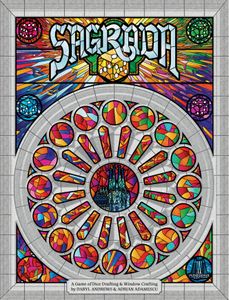
Carcassonne makes us play on a shared board, but in Sagrada we play on separate personal boards. Each turn I take an sparkly colored die from a pool and place it onto my grid of squares. I can't put the same color or same pip value next to each other, additionally some spaces limit the color or number I can place there. Each game has different ways to score my grid by the time it's full. The key of this game is the puzzle of how to build up the grid to maximize my points, but not box myself in for the future. Interaction is limited to the draft of dice, which adds some tension and perhaps an occasional block.
The mechanism of drafting tiles into a personal tableau with various constraints and scoring rules is a common one, referred to as take-and-make, but I've not found one that does it as well or as attractively as this.
Dominion
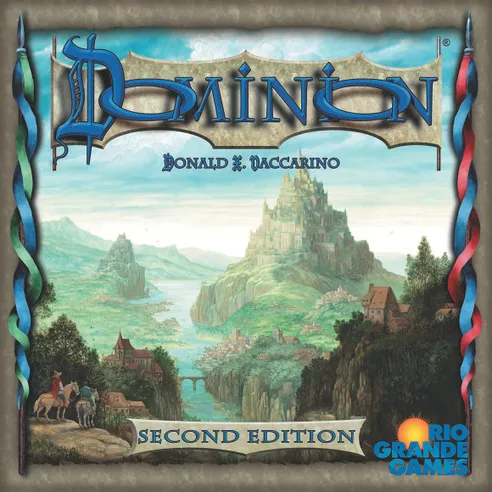
I start with a deck of weak cards, I draw some cards from this deck and use them to acquire better cards. These cards may increase the power of my deck, or score victory points. I choose from ten types of cards, referred to as the kingdom.
The game is all about figuring out how to create a powerful combination of cards from this kingdom, so that my deck will get powerful faster than my opponents. I need to gain victory point cards, but they weaken my deck, so I need to time when to switch over to collecting those. Each kingdom presents a new puzzle on how to do this effectively, and some interaction cards allow me to slow down the other players.
Dominion is designed to be remarkably expandable. The base set has twenty-five different types of cards to combine in different kingdoms of ten. Once I'm familiar with those there are over a dozen expansions, adding new cards, and occasional rule twists to vary the simple base. I've met gamers who only play Dominion, and never tire of this endlessly fascinating game.
Steam Power
One of my greatest gaming pleasures is interacting with a map, and one of the best ways to do that is to build routes, usually of railway track. Many of my favorite games do this, Steam Power does this with the easiest to learn set of rules, playing in a brisk, yet relaxed, hour. Turns are two from a simple list of actions: lay two tiles, draw two contracts, open a factory, take $3, or fulfill a contract. Once enough contracts fulfill, we score points based on money, sold-out factories, and fulfilled contracts. Those simple rules generate a keen contest for position on a range of attractive maps.
All of the above games are great introductory games, low on rules, but with plenty of depth. But they aren't the only such games that I love. The next batch of games share these characteristics, but I group them together because they are all designed by the same, remarkable, designer.
Games of Reiner Knizia
Reiner Knizia is one of the leading designers of modern board games. He is incredibly prolific, with hundreds of games to his name, he probably designed a new game in the time it takes for you to read this article. Most of these games are unremarkable, but his best games are treasures of modern board games.
The Quest for El Dorado
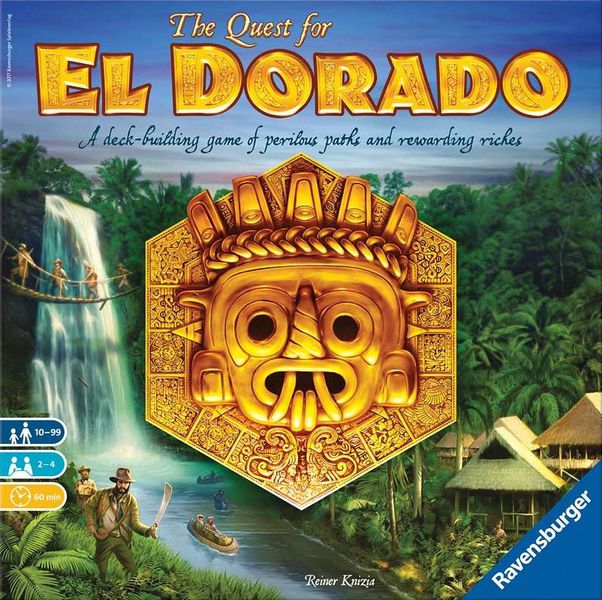
We start with a map of hexes: deserts, jungles, and water. At one end is our expedition party, at the other El Dorado - our goal. We have a deck of weak cards allowing us to slow make progress towards our goal. But we can also buy more, stronger cards - the deck building mechanism of Dominion. I choose whether to use my cards to move forwards, or to spend them to strengthen my deck. As others move in front of me, they block me, making it more expensive for me to get through some especially think jungle.
Ra
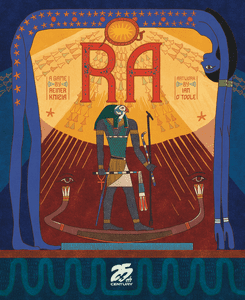
We pass around a bag of tiles. I can choose to draw a tile from the bad, adding the tile to a lot of tiles on the shared board. Or I can choose to start an auction for the tiles in this lot. We all have three tiles to bid with, each having a different number. If my number is low I want to either win a lot cheaply, or force someone else to use a higher scoring tile on an underwhelming lot. If I have a high tile, I have to choose between waiting for something better, or using it now before the era ends and we reset - thus losing my opportunity to gain some tiles.
The tiles combine into interesting sets, so as the game advances, a lot that's worth a pittance to me becomes extremely valuable to you - so should I call an auction to see if you'll sacrifice a high tile to ensure you get it?
If I'm the last player with tiles, I can pull to increase the lot, but some tiles trigger the timer that ends the era, which often ends with everyone else calling “Ra”, “Ra” as they urge a tile to end the era, which means I gain nothing from that almost wonderful set of tiles on offer.
Like many Knizia games, there are many productions of this game, but the latest - from 25th Century games - is absolute gorgeous, a production worthy of one of Kinizia's finest games.
Babylonia
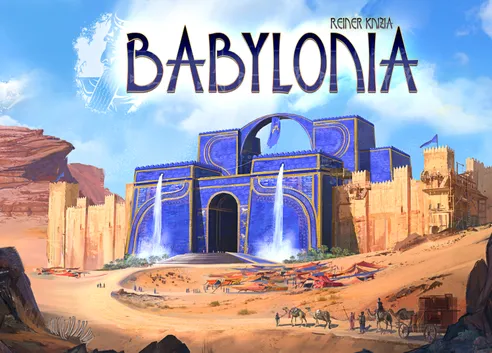
Tile-laying is a common theme in modern board games, and Kinizia has designed some of finest tile-layers out there. In Babylonia we each begin with the same pile of tiles. Each turn we draw our hand up to five tiles, and place two of them on the board - a board full of scoring possibilities. There are cities, once they are surrounded I score for each of my noble tiles that can trace a path there, so its better to delay surrounding it until I have built a large group of nobles. But when a city is surrounded, if I have a majority of the adjacent tiles, I take the city into my hand, which will score me points every time anyone takes a city, which makes me want to take it quickly. There are four ziggurats, each time I lay a tile next to one, I get a point for each ziggurat I have a tile next to. But if I lay next to ziggurats, I split my tiles, so I score less when cities are surrounded. It's a game full of alternatives, I'm gradually learning out how to balance them to get a decent score.
Samurai
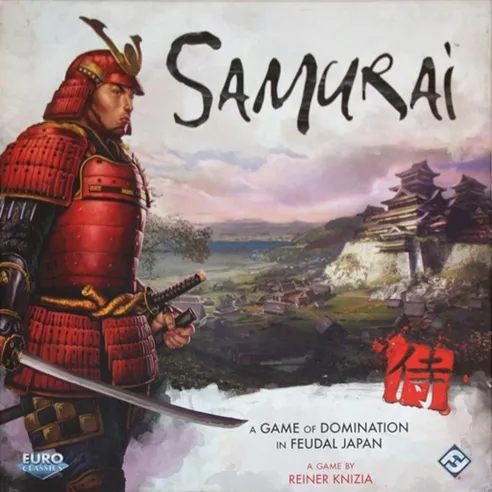
Babylonia is a recent game of Knizia's, but Samurai is one of his classics from the 1990s. It's set on a map of Japan. Like Babylonia, there are cities, and once a city is surrounded, we then score. Again we all have the same set of tiles, drawing up to five every turn. But there are important differences. Each city holds one (or more) of three different kinds of treasure. Once surrounded the player with the highest score from their adjacent tiles for that treasure takes the treasure. Where do I play my high-scoring 4 helmet tile so that it gives me the most value? I only play one tile per round, so when do I dare to place on the last-but-one space next to a town I want, risking another player sniping that treasure? Ideally I don't want to place all tiles next to a city I win, as that's less efficient than getting another player to place two tiles, then swooping in with a slightly more powerful tile to grab the prize.
At game end, I really need to have the most of one of these treasures, but then the winner is whoever has most of their non-winning treasures. So I need to win one treasure, but also do well on the others. All in all it's an enormously tense game, all about to delaying commitments until exactly the right moment.
Cascadero
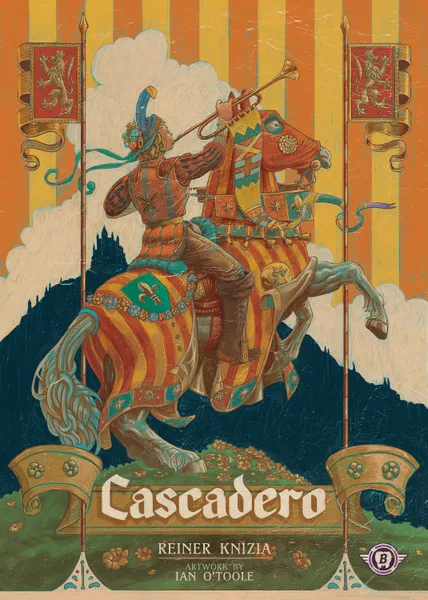
The latest Knizia tile-layer to become a favorite, but one that takes a different route than Babylonia or Samurai. In this one there's no surrounding of towns, just putting tile next to a town scores, but I get a higher score if I'm not the first person to place next to a town. The scoring is also different, there are scoring tracks. As I progress up the tracks I get benefits on the map, so I'm constantly looking between map and tracks, timing my tile placements to best utilize my position on the tracks - and block my opponents.
Modern Art
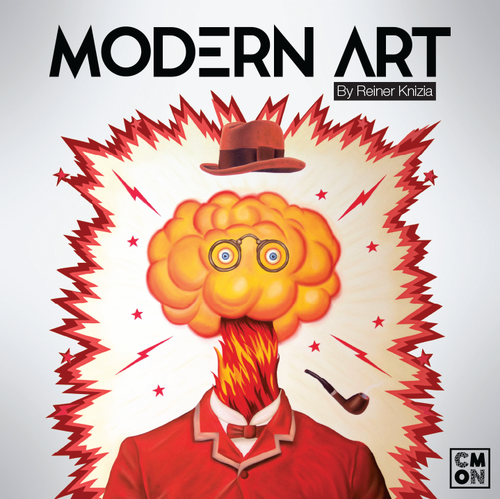
Tile-laying is a common theme of Knizia's successful games, but another common theme is auctions. Modern Art is one of his earliest games from the early 90s, and could easily be described as the quintessential auction game.
I start the game with hand of cards, each a work of art by one of five artists. On my go, I offer one of them for auction. Once an artist's fifth work is offered, we finish the season, and players get money for the three most sold artists this season, that money depending on their sales on this and previous seasons. Modern Art is a game about choosing my bids so I make a profit at season end, but also about manipulating the market so the art in my hand can get the highest prices later in the game.
The different artists have no intrinsic difference in value, but as we play then big differences appear. Knizia is often criticized, with some justification, for themeless games - but this one nails the notion of art valuations as an arbitrary consequence of fleeting commerce.
Medici
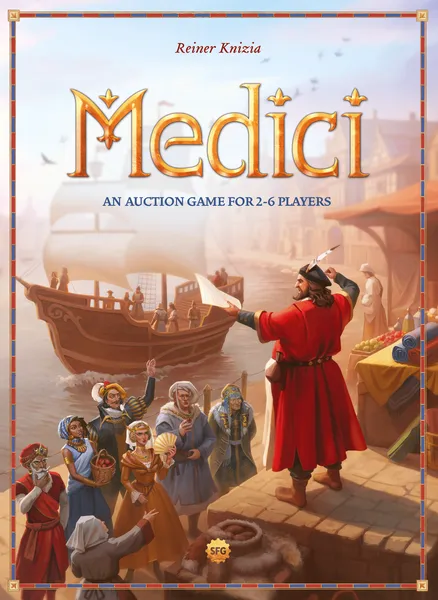
Medici the third Knizia auction game I've picked, and it rounds out what is often called his auction trilogy from the 1990s. There's no formal connection between this, Modern Art and Ra - but the three are pinnacles of auctions in modern board games.
Each round a player I draw up to 3 cards in sequence, each represents a set of goods with a value and a type. I then put the lot of cards up for auction, the winner putting the cards in their ships, which may only hold up to five cards. Once all the ships are full, or the goods run out, we score depending on the total value of the goods on their ships and the total amount of a type of goods acquired over the three rounds in the game.
As the game goes on we specialize in the different kinds of goods, so I have to judge each lot based on what it means to me, without letting my opponents get the perfect lot for little money. Money is points, so if I bid too much, I'm shooting myself in the foot. But if I lose an important lot, I may sacrifice my chance of getting the top position in spices, and all the money that comes from that position.
The Medium-Weights
The games so far are quick to teach, and play in about an hour. Now we move onto games that may take 20-30 minutes to teach and a couple of hours to play. There's more complexity here, but that gain in complexity comes with more options, and a richer game experience.
Concordia
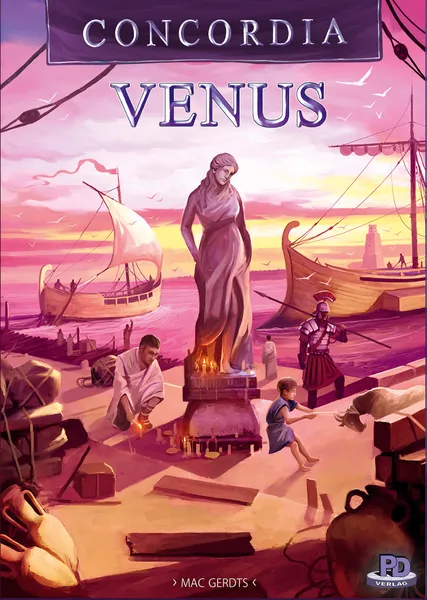
I start with a hand of cards, each of which gives me a different action on a map of some portion of the roman empire. I can move my colonists and use them to found trading houses. Then when I activate a province all trading houses in that province will generate goods. With goods I can build more trading houses and buy more cards. Over the course of the game I'll build up a network of trading houses that allow me to get more goods and combine with my cards to score points. By concentrating trading houses in a few provinces I get more goods when they produce, but if I put a trading house in a province that another player has concentrated in, I'll get goods when they use a turn to produce in that province. The game comes with a few maps, buying more maps adds variety and new twists.
(When getting more maps, it's useful to match them to how many players are playing. This BGG post dives into the details.)
Castles of Burgundy
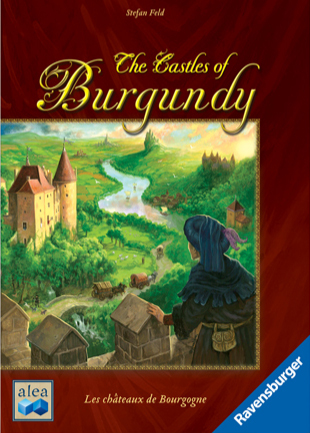
Castles of Burgundy takes the basic take-and-make style used by Sagrada and adds some more heft. The pool of tokens I can draft are divided into six segments, I roll a die to determine which segment I can pick from. Later I place it on my board, and again have to follow the die roll. I can use workers to alter the die roll, but they are valuable, so I try to make the best use of the dice rolls before resorting to using them. When I place a tile, various effects are triggered depending on the kind of tile, such as adjusting turn order or giving me an extra action. My board (or duchy) is divided into zones, which I score points for filling. I score more points for filling zones quickly but also more points for filling the larger zones - so I have to choose carefully.
Rococo

I have a hand of cards which I can play to either gain another card, materials, or patterns for garments, while others compete for those same things. Once I have what I need, I can make garments to sell, or to rent them to courtiers occupying rooms in Versailles. Whoever has the most garments in each room scores the points for that room at end of the game. The game succeeds because it's a simple set of actions for gathering resources, recipe fulfillment, and area majority, that's easy to learn and combine - yet it has competition in every step. The Eagle-Gryphon production, with Ian O'Toole's art, while expensive, is lavish - providing a luxurious experience to go with the smooth flow of the gameplay.
Worker-Placement Games
Many modern board games provide a large range of actions that I can do, and part of my task is to figure out the most efficient way to sequence those actions. Games like to place constraints on what actions I can do, some action-selection mechanism so that not just do I figure out what actions I'd like to do, but also how to manipulate the action selection mechanism to get there. The worker-placement mechanism does this by putting the actions into a shared pool, so that by taking an action, I deny it to my opponents for the rest of the round. When choosing an action, I need to figure out not just how much I want it, but also how much others want it, and thus whether I need to prioritize a popular action over one I may desire more.
Caylus
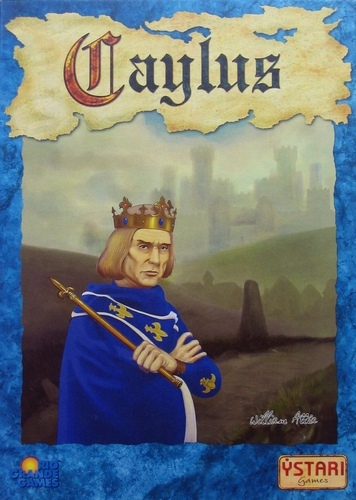
This is the game that popularized the worker-placement mechanism, and is still better than the vast majority of games that have used it since. I can place a worker to gain resources, which I then use to create new worker placement spots for everyone to use. Each time I play, people choose different spots to build, setting up a unique set of choices to work from.
Worker-placement games often have a reputation for little interaction, often with plenty of action slots so that if I can't get the one I really want, it's easy to find an alternative. Caylus, however, makes its worker-placement very interactive, which sharp battles to deny others the actions they need to succeed. Furthermore the game has zero randomness, emphasizing the skill of the players.
Viticulture
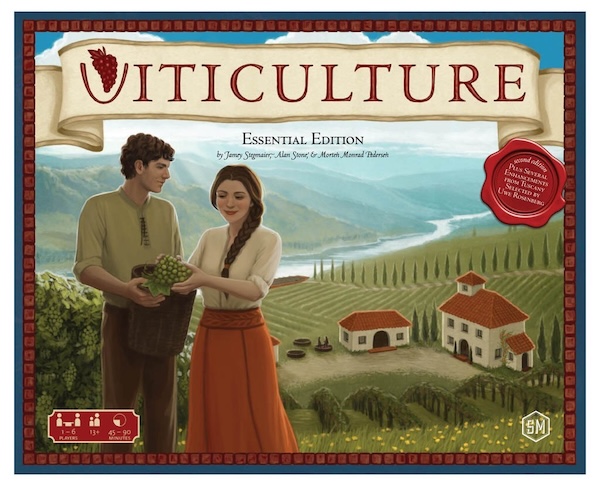
In contrast to the tense, high-skill Caylus, Viticulture is a relaxed game whose setting of wine-making encourages a matching tipple. The flow of activity in the game is easy to follow: obtain vines, plant them, harvest them, and make wine. We compete to do them efficiently, aided by a deck of visitor cards that we draw from throughout the game to open up additional opportunities. The Tuscany expansion to the game is one of the few that I really like, as I prefer to play with the four-season game.
Agricola
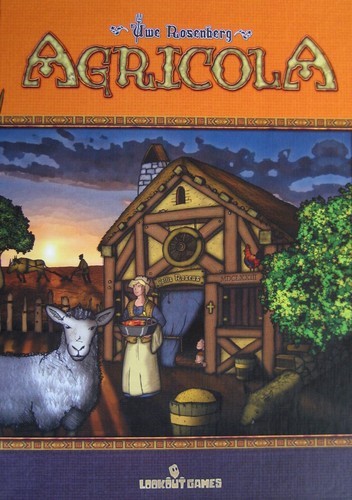
Agricola built on Caylus's success, rising to be one of the rare games to top BoardGameGeek's game rankings. Like Viticulture, it provides a clear path to points as we develop our farm, but is notably tighter, with intense competition for the worker-placement spots. Its further feature is a hand of cards, which gives me a unique set of special powers that I can blend into the core worker-placement sequence. To do well I need to figure out when to spend actions to play these cards, and how to combine them with the highly-contested action spots.
The Economic Games
Many modern board games strive to have us building things, Concordia's trading empire, Agricola's farm. Economic games lead with this, focusing on money management. The path to victory is usually pretty clear, the difficulty is figuring when and what to spend money on to be effective.
Power Grid
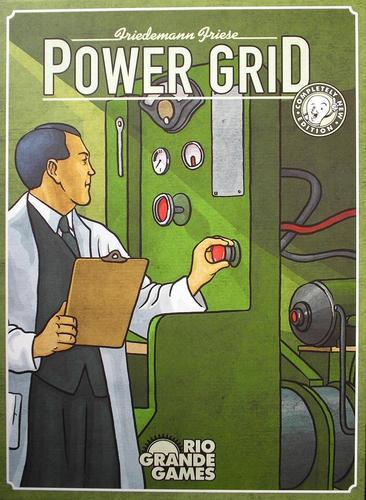
Every turn of Power Grid pushes me to spend money in three different ways. We begin with auctioning off power plants, then I must buy fuel for my fleet of plants, and finally I can add new cities to my network. The more cities I can power, the more money I make, but unfortunately more cities also means a worse turn-order position, weakening me for the next round. I need to balance my power plants, fuel, network, and turn order until the right moment when I can strike for the win - nipping past someone else making the same sprint.
Age of Steam

The game begins on a map with colored cities and a random scattering of cubes over those cities. I need to move the cubes to matching colored cities, to do that I need to build rail track connecting them. But building track requires money, for which I need to take out loans. It may take me two-thirds of the game before my rail network makes a profit, while I battle with other players also wanting to build track where I want to go, and spending scarce money on the all-important auction for turn order.
The base game is excellent, but one of the unique appeals of Age of Steam is that there are over 200 expansion maps, each of which adds a new territory and rule twists. The community of map designers continues to be active, finding a remarkable amount of ways to vary the core rules, demonstrating how well the bones of this game hold together.
I have a longer review on BGG.
Brass
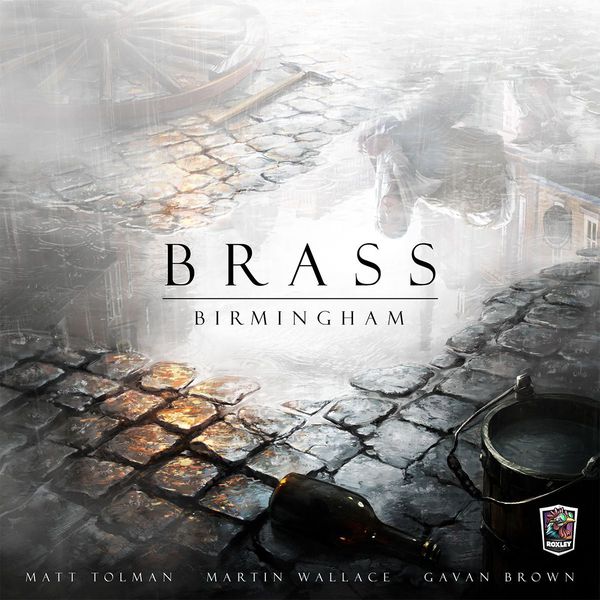
In the industrial revolution I build industries in cities and connect them with canals and railways. My hand of cards limits where I can build, and like any economic game, money is tight. A particular feature of Brass is the symbiotic nature of the player interaction: if I build an iron works, I benefit when someone else uses that iron to build their cotton mill, perhaps using someone else's rail link between our cities.
Brass is a level more complex than Power Grid and Age of Steam, requiring a couple of plays to get the hang of how it works. It comes in two titles: Lancashire and Birmingham - both with their partisans, but both excellent.
I taught Brass Birmingham on Heavy Cardboard and wrote a post celebrating its rise to the #1 spot on Board Game Geek.
Age of Industry
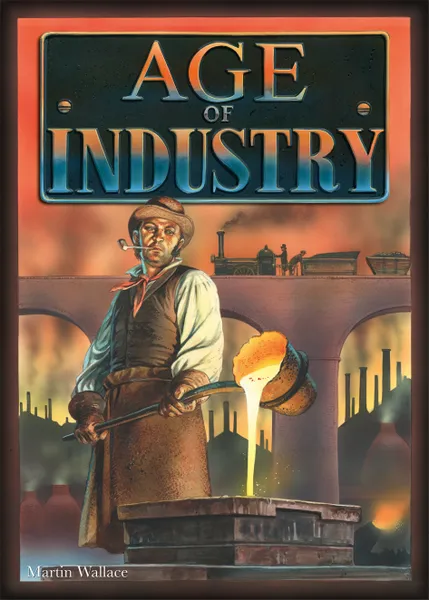
Brass has cemented itself as one of the great successes in board games, but in its earlier days some felt it was a bit too complex and fiddly. So its designer created Age of Industry to capture the core feel of Brass, but in a more streamlined package. Many serious Brass players felt it was too watered down to be worthwhile, but I find Age of Industry is a worthy member of the Brass family. The essential interplay of industry and railways is still there, as is the symbiotic interactions between the players. Age of Industry has the advantage of easier rules and shorter play time. It also has half-a-dozen maps for a varied range of industrial growth stories. (Sadly, however, it is out of print.)
Age of Rail: South Africa
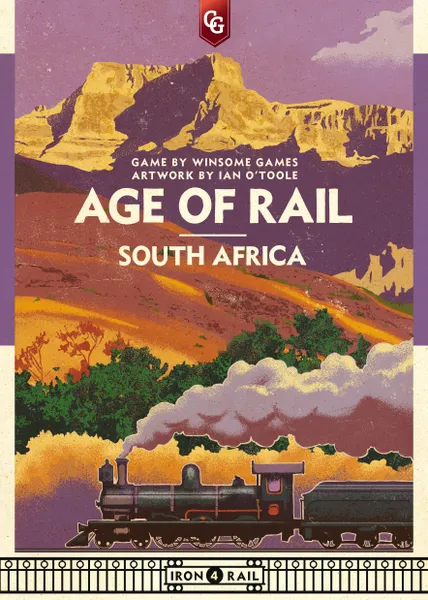
One of the most fascinating mechanisms in economic games is stockholding. In these games, players are investors, we hold stock in companies, and these companies act on the board, yielding dividends to us stockholders, while their share price rises (we hope) raising the value of our investments. Age of Rail is one of the most straightforward examples of this mechanism, one that creates a web of partial alliances. I want the blue company to do well for me and my partner, but I also need another company, with a different partner, to do well if I'm to beat my blue partner in the overall game. Our companies grow their track across the Veld, with their owners locked in a watchful game of cooperating and competition.
Vital Lacerda
Vital Lacerda is another designer that I particularly pay attention to. He has a very consistent style. His games contain a lot of rules complexity, taking 40 minutes to an hour to teach. I've found I usually dislike that degree of complexity, but his games get my attention for two reasons. Firstly, unlike a lot of Euros, they are very thematic. Every rule is inspired by the theme of the game, which makes the rules easier to understand and more interesting. Secondly he has a knack for putting mechanism together in an intricate construct which defies my simple descriptions, leading many reviewers to roll out the metaphor of vintage clockwork. On top of this, his collaboration with Eagle-Gryphon games and the artist Ian O'Toole has led to spectacular productions, both beautiful and a pleasure to play with, worth their elevated price.
Speakeasy

We players are mobsters during prohibition, part of the syndicate of Lucky Luciano. As such, we don't attack each other, but we do produce illicit booze, run speakeasies and casinos, buy or rob from rum runner boats, fight off out-of-town mobsters, and pay off the police. As our infamy grows, and we dominate zones of New York, we gain more money to win the game with. The game play here is particularly smooth by the standards of heavy games, avoiding the multi-step actions that need regular reads of the player aid.
The Gallerist
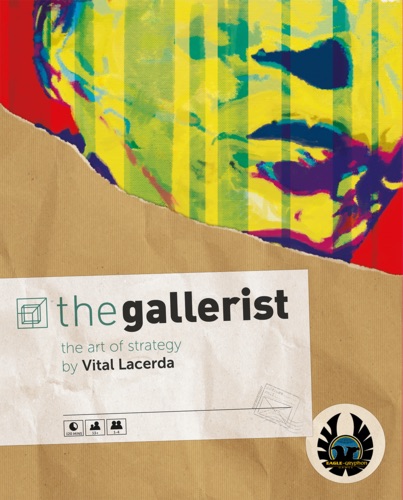
We find new artists, boosting their fame with media appearances, exhibiting them in our galleries, and selling their art for enough profit to buy more. Our assistants head out to international markets, we attract VIPs to boost our influence and investors to boost our finances. If two of us boost the same artist, we can both benefit. A highlight mechanism here is the influence track, and how I can carefully manage it to boost my money and actions at the right moments.
Lisboa

In 1755 a massive earthquake struck the city of Lisbon. As well as damage from the quake, there were the inevitable followers of tsunami and fire. We players are rebuilding the city into the modern grid designed with enlightenment sensibilities. We build shops and public buildings, and if we arrange this carefully, we gain the true sign of prestige in this era - wigs.
Lacerda has produced several other games, with themes like colonizing Mars, wine cultivation in Portugal, and the scientific process. I've enjoyed these other games too, but haven't played them enough to confidently give them a star. But most Lacerda fans agree that the best way to start with his games is pick the one whose theme is most appealing. I agree with this, but with a caveat that I also find that Speakeasy's smooth game play gives it a slight edge.
OK - I've run out of classifications
The danger of writing a compendium of my favorite games like this is that it turns into a dull laundry list of games. I tried my best to avoid this by organizing into some kind of coherent categories that form a narrative. But I can only keep this up for so long. So now here's the rest, no worse for my inability to put them into convenient groups.
Race for the Galaxy
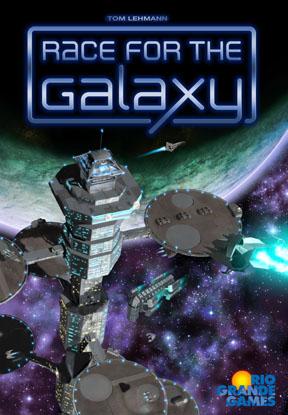
Race for the Galaxy is a tableau-building card game. Each turn I may draw cards, build cards into a tableau, and use these cards to gain resources to build more cards and score victory points. The essence of the game is working to get the best out of the random cards that come my way, forming a strategy to make best advantage of my early cards, but being able to tune that strategy depending on the cards I get later. I must do this quickly, as the game finishes well before I get a chance to dawdle. This game takes a while to learn, but plays quickly once I got the hang of it, and packs a remarkable punch into its fast play time.
My post Descendents of San Juan elaborates on this type of game.
Keyflower
Keyflower does a remarkable job of combining worker-placement and auctions. The game begins with a shared offer of tiles, which I can use my workers to activate, or bid with the workers to take the tiles into my village in the next season. Once in my village others can still activate them, at the cost of losing their worker to me for future rounds. As we get to the end of the game, the tiles we are bidding on are those that score victory points, where only the winner of the auction for them gets to score with that tile, which leads to terrifically tense final rounds.
Puerto Rico 1897

Puerto Rico has spent longer as #1 game on Board Game Geek than any other game, and while its star has fallen, it still remains one of the great examples of modern board games. It perfectly captures the tension between building up an engine to gather resources and timing the switch to generating victory points. There's only a soupçon of randomness, which long raised this game to a high level of skill. For many years it suffered due to its original setting in a Caribbean plantation, but the 1897 reset of the game took it out of that dark era.
Ginkgopolis

The theme says we're building a city out of ginkgo trees, but the theme's only consequence to the game is that VPs are ginkgo leaves. The mechanisms more than make up for it. Each turn we may place tiles of three colors on the growing city, adjacent tiles form a zone, where we get majority points for at the end of the game. But I can also change the color of a tile position, manipulating the shape of these zones. Placing tiles give me a card, which may boost my engine or give me a way to score leaves. The game is one of those exemplary cases of fusing mechanisms into a game that perches on exactly the right spot of complexity. But while it's a simple game, there's someone about it that makes it oddly hard to teach.
Glass Road
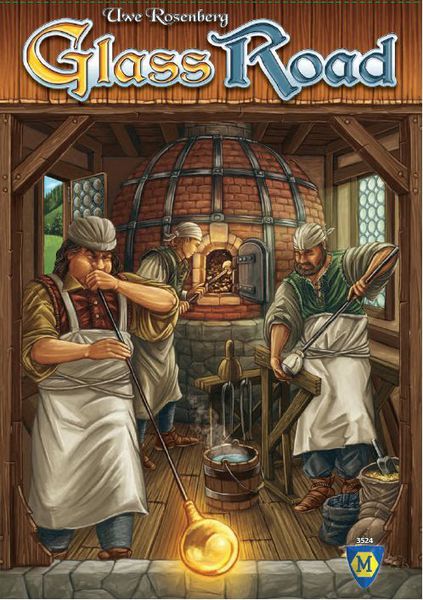
At first blush, this is a generic Eurogame of gaining resources to build structures on a personal player board. But it has an important twist that adds an unusual form of interaction. I select possible actions for a round by choosing five of fifteen cards, I only get to choose three actions, but should someone else choose an action I have, I will play it as an extra action. And there's a resource wheel that keeps track of my resources, but turns automatically to produce glass or brick, which may be a problem should I be counting on one of its raw materials for something else.
The Great Zimbabwe

We are tribes in the African Savannah competing to build temples and manufacture the ritual goods necessary for them. A simple modular map lays out the logistic puzzle to figure out how to get the needed goods to the right temple. There's a rare example of symbiotic interaction: to raise a temple, I'm going to need to buy goods from another player, thus improving their position. A distributive auction for turn-order can be vital, as does choosing which god to worship for its special power. Like most Splotter games, this is hard to get, charges a deluxe price for mediocre components, yet its gameplay outweighs that nuisance.
Pax Pamir (2nd Edition)

Pax Pamir is set around Afghanistan, during “The Great Game” - the nineteenth century contest between the British and Russian empires. But our role in this game is as a faction of Afghans, keen to use the Great Powers for our own ends. I build a tableau from a market of cards of historic figures, these cards give me abilities, but the tableau is fragile. I lose cards as often as I gain them, sometimes sacrificing them myself should I want to remove some pesky spies or switch sides. It's a game of shifting alliances and dramatic turns, done with a smooth game systems and an outstanding production in art and components.
Seize the Bean
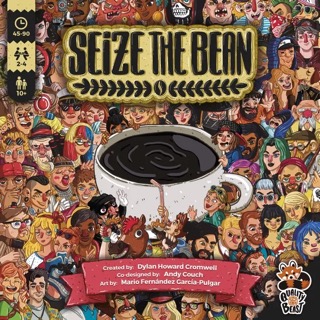
A game whose theme of running a coffee shop in Berlin comes through as clearly as the most robust espresso. I take two actions each round, do I improve my shop with exposed brickwork, making it more appealing to the hipsters, or get the coffee and milk I need to serve my rank of customers? Happy customers give me victory points, and as I get more customers, I can win majorities for each customer group. To keep them all happy I need to figure out how to use each customer's abilities to keep the coffee flowing smoothly.
Once I figure out how to use the initial six customer groups, there's another twenty in the box to work on, many introducing some fraught interactions. The many cards are individually illustrated, poking gentle fun a Berlin's coffee sippers, helping the game serve an atmosphere of wry fun.
Three Kingdoms Redux
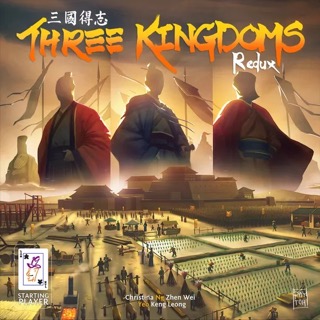
This is one of the heaviest games among my favorites, with a robust setting in the great Chinese tale The Romance of the Three Kingdoms. Its theme is reinforced by its clever twist on worker placement games. The workers aren't just generic meeples, but generals from the story, each with their own individual abilities. I need to use them thoughtfully to strengthen my kingdom, yet to score VPs I need to station them at borders, and lose their ability to take actions - making this one of the very few worker-placement games where I need to lose my workers. Like many of these generals, the greatest limitation of the game comes from one of its greatest strengths: it is impeccably designed for exactly three players.
Yokohama
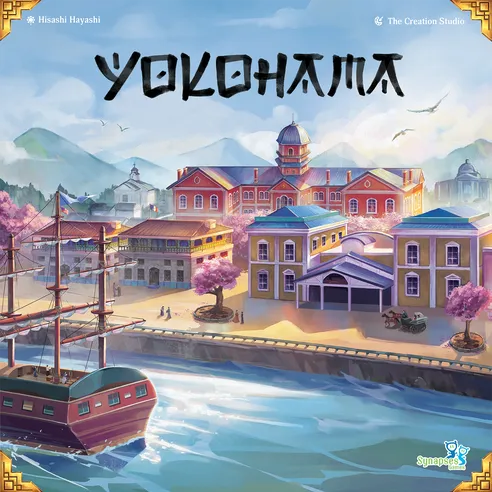
Yokohama is a great example of the worker-movement mechanism. The board consists of a set of tiles, arranged in a random order. My turn involves moving my president piece a number of consecutive tiles, along a route traced by my earlier placement of assistants. I then execute the action on the final tile, its power depends on how many assistants I put there earlier. Other presidents block me as they go about similar activities. The flow of actions is a commonplace mix of resource gathering and recipe fulfillment but the worker-movement mechanism turns the action selection into an appealing (and interactive) spatial puzzle.
Significant Revisions
13 December 2025: First Published