Fragments: October 4
Sun 04 Oct 2026 23:28 CDT
walking the same path as the Krell, Ola Bini banished, interviewed at DDD Europe with Eric Evans, future of reading code, latest Google model knows less, but pretends less

Software development is a young profession, and we are still learning the techniques and building the tools to do it effectively. I've been involved in this activity for over three decades and in the last two I've been writing on this website about patterns and practices that make it easier to build useful software. The site began as a place to put my own writing, but I also use it to publish articles by my colleagues.
In 2000, I joined Thoughtworks, where my role is to learn about the techniques that we've learned to deliver software for our clients, and pass these techniques on to the wider software industry. As this site has developed into a respected platform on software development, I've edited and published articles by my colleagues, both Thoughtworkers and others, to help useful writing reach a wider audience.

photo: Christopher Ferguson
Martin Fowler
If there's a theme that runs through my work and writing on this site, it's the interplay between the shift towards agile thinking and the technical patterns and practices that make agile software development practical. While specifics of technology change rapidly in our profession, fundamental practices and patterns are more stable. So writing about these allows me to have articles on this site that are several years old but still as relevant as when they were written.
As software becomes more critical to modern business, software needs to be able to react quickly to changes, allowing new features to be conceived, developed and put into production rapidly. The techniques of agile software development began in the 1990s and became steadily more popular in the last decade. They focus on a flexible approach to planning, which allows software products to change direction as the users' needs change and as product managers learn more about how to make their users effective. While widely accepted now, agile approaches are not easy, requiring significant skills for a team, but more importantly a culture of open collaboration both within the team and with a team's partners.
This need to respond fluently to changes has an important impact upon the architecture of a software system. The software needs to be built in such a way that it is able to adapt to unexpected changes in features. One of the most important ways to do this is to write clear code, making it easy to understand what the program is supposed to do. This code should be divided into modules which allow developers to understand only the parts of the system they need to make a change. This production code should be supported with automated tests that can detect any errors made when making a change while providing examples of how internal structures are used. Large and complex software efforts may find the microservices architectural style helps teams deploy software with less entangling dependencies.
Creating software that has a good architecture isn't something that can be done first time. Like good prose, it needs regular revisions as programmers learn more about what the product needs to do and how best to design the product to achieve its goals. Refactoring is an essential technique to allow a program to be changed safely. It consists of making small changes that don't alter the observable behavior of the software. By combining lots of small changes, developers can revise the software's structure supporting significant modifications that weren't planned when the system was first conceived.
Software that runs only on a developer's machine isn't providing value to the customers of the software. Traditionally releasing software has been a long and complicated process, one that hinders the need to evolve software quickly. Continuous Delivery uses automation and collaborative workflows to remove this bottleneck, allowing teams to release software as often as the customers demand. For Continuous Delivery to be possible, we need to build in a solid foundation of Testing, with a range of automated tests that can give us confidence that our changes haven't introduced any bugs. This leads us to integrate testing into programming, which can act to improve our architecture.

San Francisco
There are many kinds of software out there, the kind I'm primarily engaged is Enterprise Applications. One of the enduring problems we need to tackle in this world is data management. The aspects of data managment I've focused on here are how to migrate data stores as their applications respond to changing needs, coping with different contexts across a large enterprise, the role of NoSQL databases, and the broader issues of coping with data that is both Big and Messy.
A common problem in complex software systems is how to capture complicated domain logic in a way that programmers can both easily manipulate and also easily communicate to domain experts. Domain-Specific Languages (DSLs) create a custom language for a particular problem, either with custom parsers or by conventions within a host language.
I've written seven books on software development, including Refactoring, Patterns of Enterprise Application Architecture, and UML Distilled. I'm also the editor of a signature series for Addison-Wesley that includes five jolt award winners.
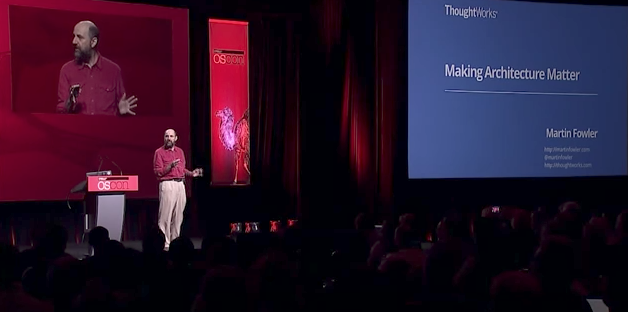
I'm often asked to give talks at conferences, from which I've inferred that I'm a pretty good speaker - which is ironic since I really hate giving talks. You can form your own opinion of my talks by watching videos of some my conference talks.
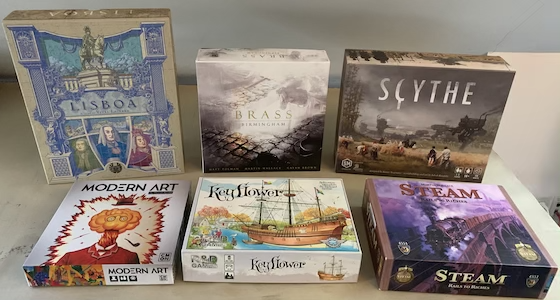
I've long been a fan of board games, I enjoy a game that fully occupies my mind, clearing out all the serious thoughts for a bit, while enjoying the company of good friends. Modern board games saw dramatic improvement in the 1990's with the rise of Eurogames, and I expect many people would be surprised if they haven't tried any of this new generation. I also appear regularly on Heavy Cardboard.
If you'd like to be notified when I post new material, subscribe to my RSS feed. I also post announcements of new material to Fediverse (Mastodon), Bluesky, LinkedIn, and X (Twitter) . I also have a page dedicated to recent changes.
Sun 04 Oct 2026 23:28 CDT
walking the same path as the Krell, Ola Bini banished, interviewed at DDD Europe with Eric Evans, future of reading code, latest Google model knows less, but pretends less
Wed 30 Sep 2026 10:14

Not every presentation needs slides, but when they earn their place, they work as a visual channel that complements the speaker rather than replacing them. Sumeet Gayathri Moghe sets out the principles that follow from that idea — control over the rate of knowledge exposition, tight coupling between slides and speaker, minimalism by default, visuals that say more than words can, and never sending your slides out in advance.
Tue 29 Sep 2026 09:43
A Sensible Default is a practice that, absent some overriding context, should be used when carrying out a certain kind of task. In software development such sensible defaults might include things like “use version control”, “separate UI logic from domain logic”, “automate deployment pipelines”.
Tue 29 Sep 2026 08:41
agents make programming harder, creating a breakaway agent needs super-persistence, AI needs a conscience more than consciousness, theses on AI regulation
Thu 24 Sep 2026 10:10

Human collaboration, like most things, improves with feedback. But it's not obvious how to make feedback effective. Anuja Karnik and Sumeet Gayathri Moghe pass on a bevy of tips for healthy feedback, based on the principle that both praise and criticism should be seen as positive.
Thu 17 Sep 2026 09:50
I see AI and LLMs as bringing a mix of boons and banes, but one feeling dominates: not just are they pretending to be a person, but the kind of person I don't like.
Tue 15 Sep 2026 11:11
Sumeet Gayathri Moghe finds many folks building presentations get tangled in building slides without a coherent narrative. He advises distilling the big idea, visualizing the audience, and building a structured storyline.
Wed 09 Sep 2026 12:21

A quick survey of recent engagement of my posts on social media, indicating which service has by far the most engagement, and which service has seen a precipitous decline since early 2025.
Tue 08 Sep 2026 09:42
Like me, Sumeet Gayathri Moghe is tired of poor presentations with bad slide decks. He's started to write a series of posts on how to avoid these calamities, beginning with a post that questions whether a presentation is needed at all.